
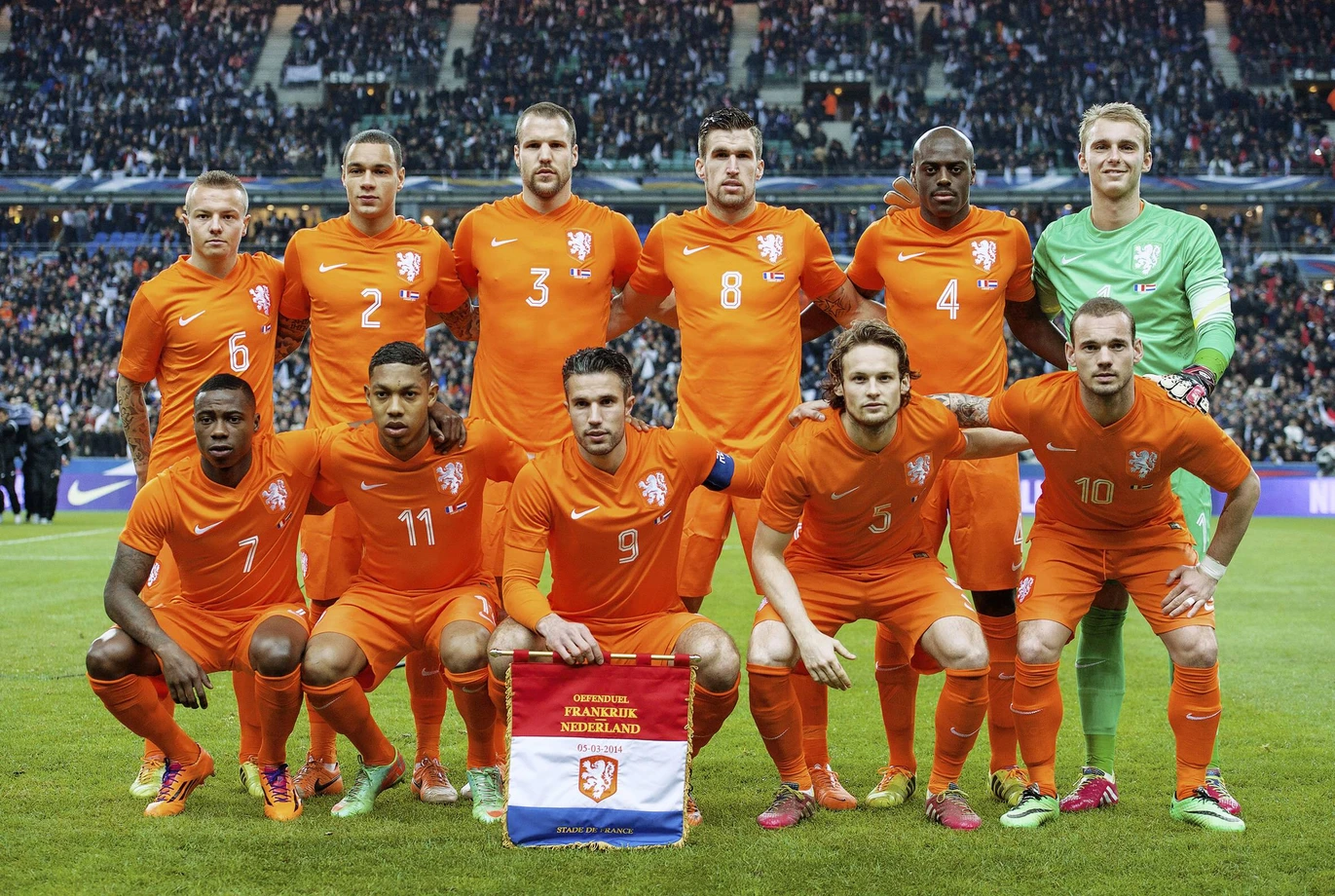
The 2026 World Cup is more than a sports tournament for the Netherlands. For many Surinamese Dutch people, this World Cup is also a moment where identity, heritage and pride come together. Oranje is playing with a squad in which several players with Surinamese roots have a visible role, while Suriname itself hoped until shortly before the tournament for a historic first World Cup appearance. As a result, the conversation is not only about winning, losing and line-ups, but also about the question: who do you play for when you carry multiple worlds within you?
That question is especially relevant at this World Cup because of Crysencio Summerville. The Rotterdam-born attacker chose to represent the Netherlands, while Suriname had previously shown clear interest in him. Reuters reported that Summerville has strong ties to his Surinamese background and that he himself spoke about a choice in which emotion and reason come together. His choice for Oranje came at a time when Suriname was still dreaming of a World Cup debut through the intercontinental play-offs.
Summerville then immediately became one of Oranje’s standout stories. He scored at the World Cup against Japan and then again against Sweden, making his choice for the Netherlands immediately visible in sporting terms. According to Reuters, national coach Ronald Koeman praised him for his speed, intelligence between the lines and ability to keep possession. This made Summerville not only a player in the squad, but also a symbol of modern Dutch football: technically trained in the Netherlands, shaped by urban culture and connected to family history outside Europe.
For the Surinamese Dutch community, that is recognizable. Many young people grow up with multiple layers of identity. At home, Surinamese customs, food, language, music and family stories may be central, while school, work, sport and public visibility are mainly Dutch. In football, that tension becomes visible on the highest stage. A player can feel fully Dutch, be deeply connected to Suriname and still have to choose only one country once he plays senior international football.
That makes the 2026 World Cup both particularly painful and interesting. Suriname came closer to a World Cup ticket than ever before, but lost 2-1 to Bolivia in the intercontinental play-offs in March 2026. Concacaf confirmed that Suriname lost in Monterrey in the semi-final of the FIFA World Cup 2026 Play-Off Tournament. Reuters described how Suriname took the lead through Liam van Gelderen, but Bolivia turned the match around in the second half. That ended Suriname’s dream of playing at a World Cup for the first time.
That near-qualification in particular shows how strong the football connection between the Netherlands and Suriname has become. Suriname built its World Cup dream largely on players who were born or trained in the Netherlands. Reuters reported in March 2026 that a change in Surinamese nationality legislation strengthened the squad with players who have family ties to Suriname. Of the 26 players who traveled to Mexico for the play-offs, Reuters reported that 22 were born in the Netherlands and one in Belgium.
That is no coincidence. Dutch football development has produced players with Surinamese roots for decades. Names such as Ruud Gullit, Frank Rijkaard, Edgar Davids, Clarence Seedorf and Patrick Kluivert are part of Oranje’s collective memory. In the current generation, the conversation continues with players such as Virgil van Dijk, Denzel Dumfries, Donyell Malen, Ryan Gravenberch, Xavi Simons and Crysencio Summerville. Some are in the squad at this World Cup, others are missing the tournament due to injury or selection circumstances, but together they show how great the Surinamese influence on Dutch football is.
Virgil van Dijk is one of the best-known examples. He is captain of Oranje at this World Cup and represents leadership, calmness and international experience. FIFA named Van Dijk as captain of the team when announcing the Dutch World Cup squad. For many Surinamese Dutch people, his presence carries extra meaning, because Van Dijk has long been seen as one of the greatest footballers with a Surinamese family background in modern football.
Denzel Dumfries also fits into that story. He was born in the Rotterdam region and has a Surinamese mother and an Aruban father. His career is notable because he once represented Aruba, but eventually chose the Netherlands and grew into a regular player for Oranje. As a result, he embodies exactly the complexity of Caribbean, Surinamese and Dutch identity within football.
Donyell Malen is another example of an Oranje player with a Surinamese background. Aston Villa described him upon his arrival as a player of mixed heritage and of Surinamese descent through his father. At this World Cup, he is part of an attack in which the Netherlands is looking for speed, depth and flexibility. Together with players such as Summerville and Cody Gakpo, Malen gives Oranje a forward line that strongly suits modern international football: fast, dynamic and used to major competitions.
Ryan Gravenberch shows another side again. He was born in Amsterdam and comes from a generation that grew up with the Ajax school, international transfers and an increasingly global view of football. Transfermarkt lists Suriname alongside the Netherlands as Gravenberch’s nationality, and Surinamese media and community platforms have long connected him to his roots. His profile shows how players with a Surinamese background can be connected to Suriname not only culturally, but also socially.
The story of Xavi Simons makes the dynamic even broader. He has Surinamese roots through his father and grew into one of the most talked-about talents of his generation. His absence is relevant for this World Cup, because according to several World Cup squad overviews he is unavailable due to a serious knee injury. Still, his name remains part of the broader conversation about Surinamese-Dutch football talents and the future of Oranje.
What makes this World Cup different from previous tournaments is that Suriname itself has meanwhile become much more serious in international football. For years, the discussion was mainly: how strong would Suriname be if all players with Surinamese roots played for Natio? In 2026, that question came closer to reality. Suriname’s squad consisted of many Dutch-trained professionals, including players from European competitions, and came close to historic qualification. FIFA reported in March that Suriname started the play-offs with players including Sheraldo Becker, Richonell Margaret, Joel Piroe and Melayro Bogarde.
For players, however, the choice is not simple. The Netherlands usually offers the highest sporting stage, a greater chance of World Cup success and more commercial visibility. Suriname offers emotional connection, family history and the chance to help a country move forward historically. With Summerville, that tension became very clear at this World Cup. He played in Dutch youth teams, felt connected to Suriname and ultimately chose Oranje because he wanted to compete at the highest level.
That choice can trigger different reactions within the community. Some fans understand that players choose the Netherlands, because they were born there, trained there and have the greatest sporting opportunity there. Others wonder how strong Suriname could have been if more top players had chosen Natio. That makes this topic sensitive, but also valuable. It shows that sport cannot be separated from history, migration and recognition.
The bond between Suriname and the Netherlands is historically deep. After Suriname’s independence in 1975, many Surinamese people migrated to the Netherlands. Cities such as Amsterdam, Rotterdam, Almere, The Hague and Utrecht developed large Surinamese communities. In that urban environment, many footballers grew up who later reached the Dutch league, the Premier League, Serie A or the Champions League. The World Cup is therefore not only a showcase for national talent, but also for the strength of the diaspora.
For the Netherlands, that diaspora has been a sporting engine for decades. Oranje’s playing style is often associated with technique, tactics and training, but the human foundation is broader. Street football from Amsterdam Southeast, Rotterdam squares, families with migration histories, Surinamese discipline, Caribbean flair and Dutch youth academies come together in players who make a difference internationally. You can see that in Van Dijk’s calmness, Dumfries’ energy, Malen’s depth, Gravenberch’s development and Summerville’s breakthrough.
For Suriname itself, the 2026 World Cup is not an endpoint despite the elimination. The near-qualification has shown that Natio can come much closer to the world stage with a strong diaspora approach. Reuters already wrote in 2025 that Dutch talent was helping several countries move toward the World Cup, including Suriname, Curaçao, Cape Verde and Indonesia. That development shows that modern national teams are increasingly being built around migration history and dual connection.
At the same time, this brings legal and organizational questions. In the Netherlands, discussion arose in 2026 about players who switch sporting nationality and the consequences for passports, work permits and club registration. Reuters reported that a broader eligibility discussion also affects players switching to countries such as Suriname, Indonesia and Cape Verde. This makes clear that diaspora football is not only about emotion, but also about policy, administration and sports law.
For fans, however, the emotional side remains the strongest. When Van Dijk wears the captain’s armband, Dumfries pushes forward down the right side, Malen searches for depth or Summerville scores, many Surinamese Dutch people see more than just Oranje. They see recognition. They see families that once moved between countries. They see children of migration standing on the biggest stage. And they see proof that Surinamese roots continue to play a lasting role in Dutch sports culture.
This World Cup therefore shows a double reality. Suriname is not there itself, but Suriname is present. Not as a flag on the fixture list, but through players, families, stories, choices and supporters. That makes the subject bigger than football alone. It is about the question of how identity works when your history lies in one country, your youth in another and your career unfolds on a global stage.
In the coming years, this discussion will only become more important. If Suriname further professionalizes its diaspora approach, Natio may come close again at future tournaments. At the same time, the Netherlands will continue to benefit from players with Surinamese roots who progress through Dutch academies to the world top. The question is therefore not whether Surinamese-Dutch football will remain important, but how visible and organized it will become.
For this World Cup, the conclusion is clear: Dutch footballers with Surinamese roots are once again leaving their mark on the tournament. Their performances make Oranje stronger, but their background gives the story extra meaning. For the Surinamese Dutch community, that is exactly why football is so powerful. It is sport, but also family history, pride, freedom of choice and identity all in one.



Comments
Professional community conversations - keep it friendly and on topic.
Your comment
Log in to post a comment and join the community conversation.
Log in