
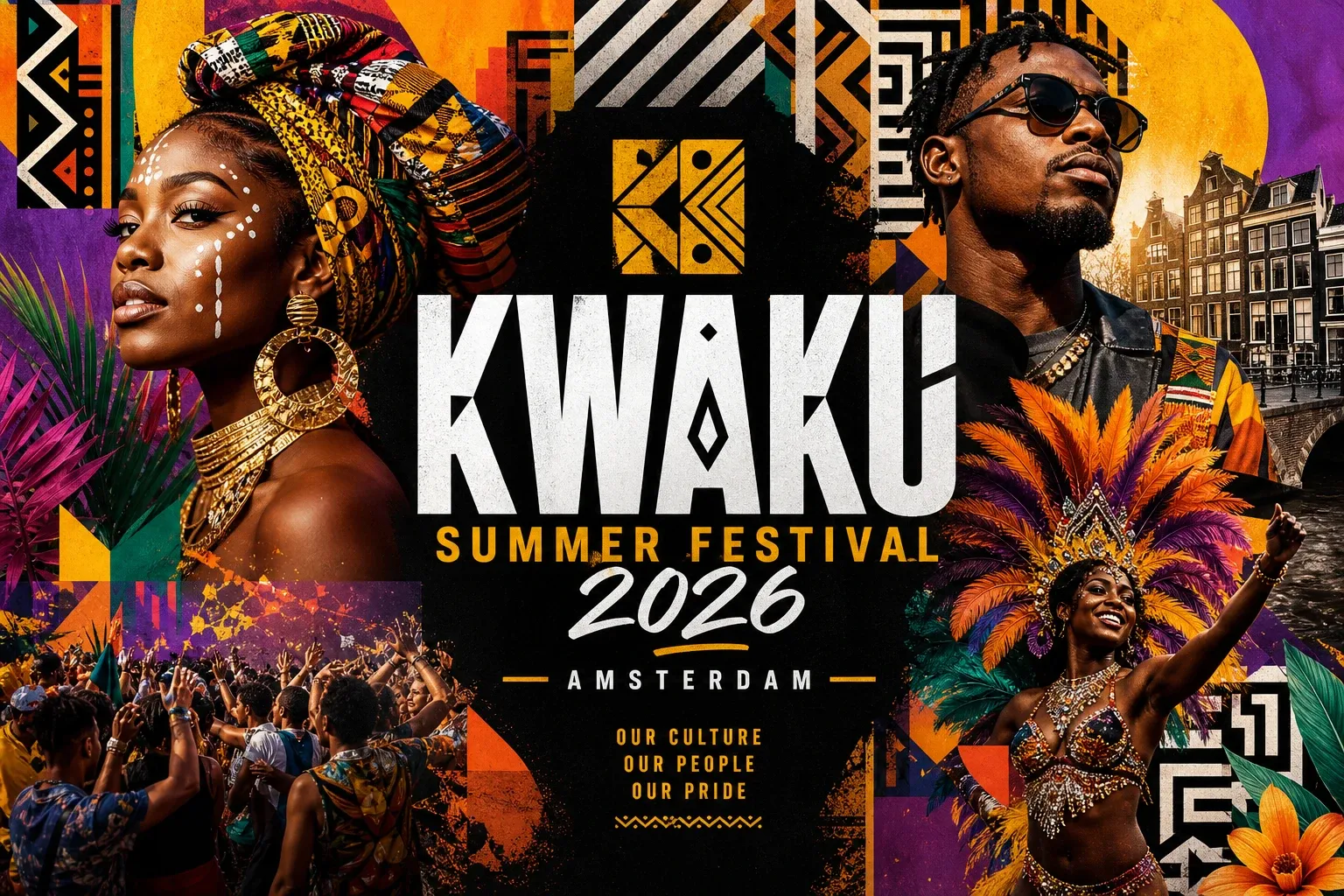
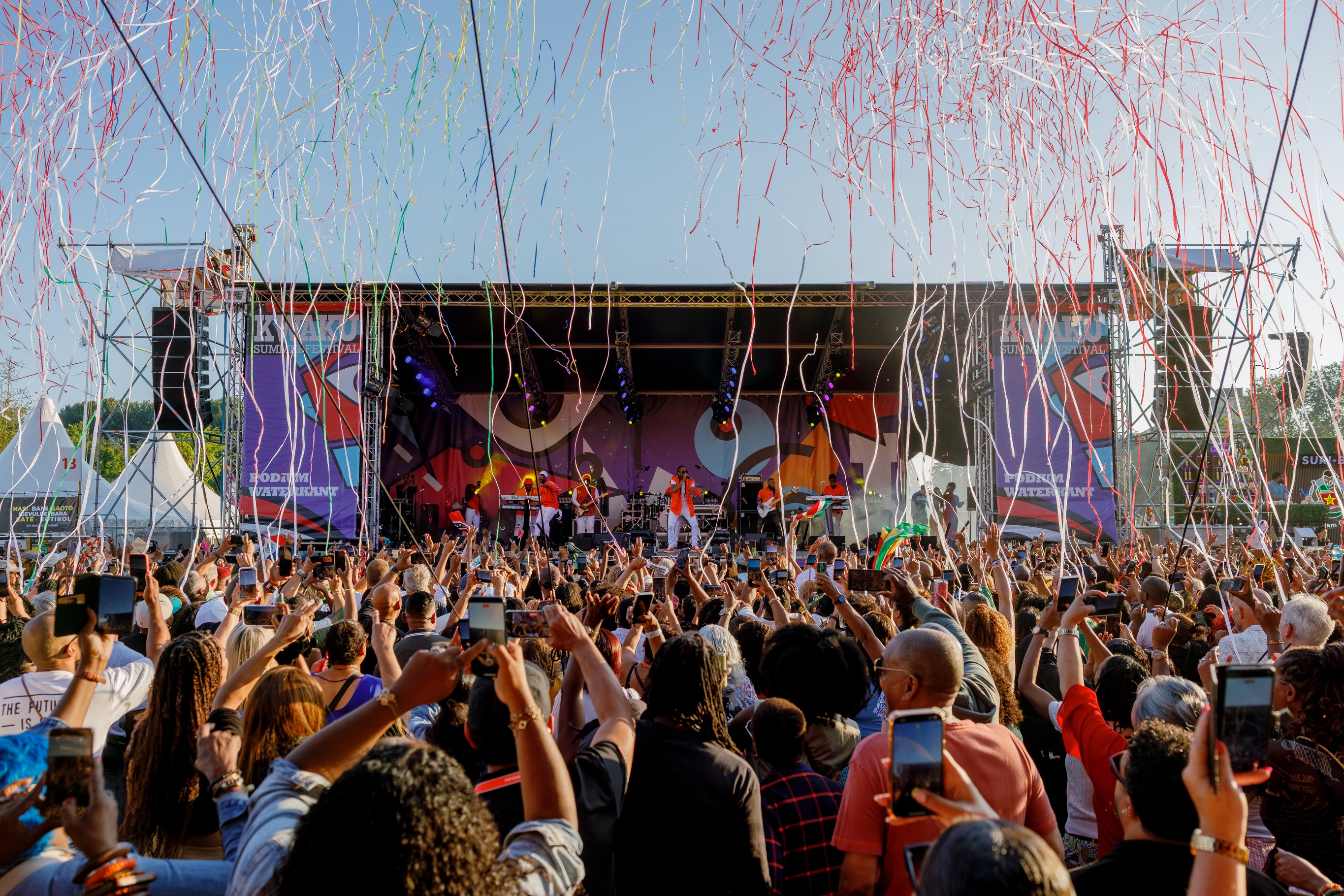
Kwaku has grown into one of the best-known cultural festivals in the Netherlands, but its origins are much smaller and more local. The festival began in 1975 as a summer football tournament for young people in the Bijlmer. What started as a sporting meeting place for the neighborhood grew over fifty years into a festival where music, food, dance, sport, debate and culture come together.
For many Surinamese Dutch people, Kwaku is more than a festival. It is a point of recognition for the diaspora in Amsterdam Southeast. After Suriname’s independence in 1975, the Bijlmer became an important place for Surinamese migrants in the Netherlands. Kwaku grew along with that community and increasingly became a place where Surinamese, Caribbean, African and urban culture visibly come together.
In 2025, Kwaku celebrated its 50th edition. According to NOS, it once began as a small football tournament in the Bijlmer and has since grown into a festival that attracts more than 120,000 visitors each year. That growth shows how strongly local community culture can develop into a national event with broad appeal.
The strength of Kwaku lies in its combination of elements. Visitors come for Afro-Caribbean food stalls, live music, dance, sport, family programs and encounters with people from the community. As a result, the festival is not only a day out, but also a cultural gathering place where generations meet each other.
For Amsterdam Southeast, Kwaku has a special meaning. The festival is often seen as a celebration of the identity of the district. I amsterdam describes Kwaku as a festival that began as a football tournament for the neighborhood and has for years been a major celebration of Southeast’s identity, with dance, music, film, food and football in Nelson Mandelapark.
In 2026, Kwaku returns to Nelson Mandelapark. The official festival information lists four weekends: July 11 and 12, July 18 and 19, July 25 and 26, and August 1 and 2. On regular weekend days, the festival grounds are open from 14:00 to 23:00.
What stands out is that Kwaku has become increasingly professional over the years. The festival now works with larger stages, ticket sales, line-ups, food concepts and themed days. At the same time, its foundation remains recognizable: community, football, music and food are still at the core. That exact combination makes Kwaku different from many other summer festivals.
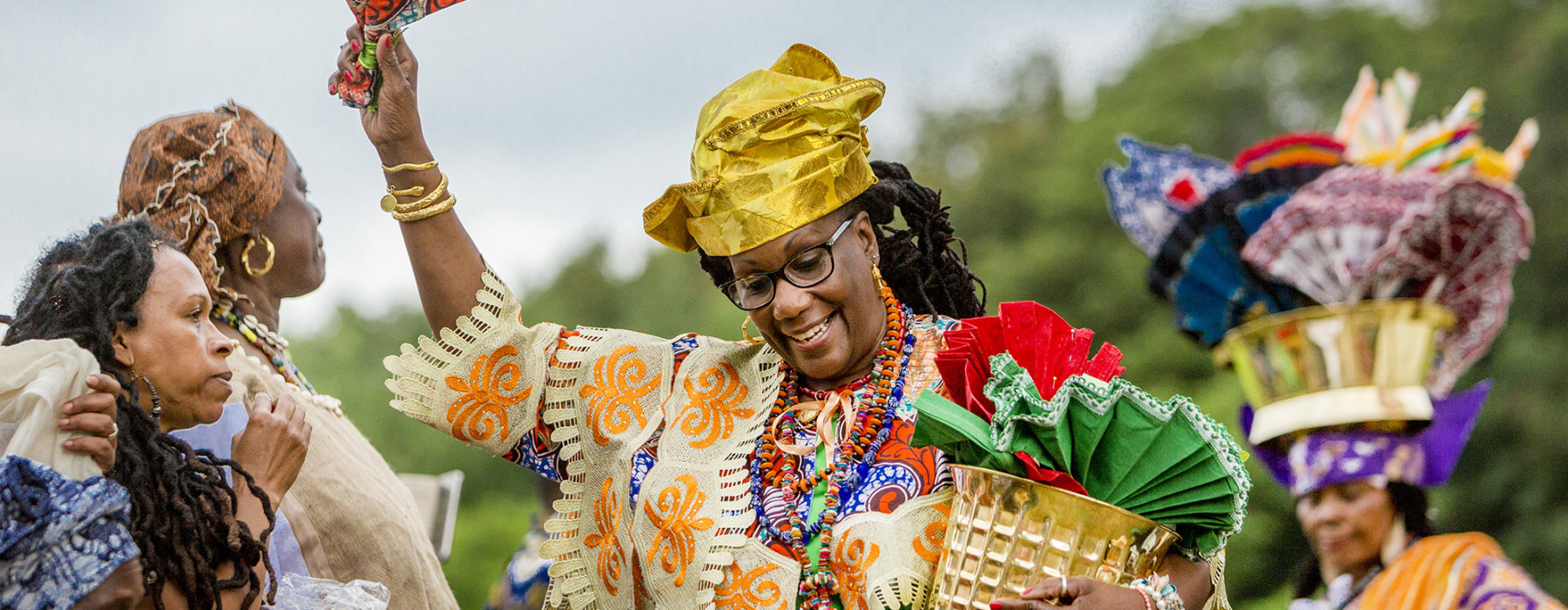
For the Surinamese Dutch community, Kwaku remains important because it offers a public place for culture that was long passed on mainly within families, neighborhoods and communities. Kaseko, kawina, Surinamese dishes, family traditions and street culture all get a large stage at Kwaku. In this way, the festival also becomes a form of cultural memory.
The growth of Kwaku also says something about the Netherlands itself. What once began as a neighborhood initiative by a migrant community has grown into a festival that attracts people from all over the Netherlands. In doing so, Kwaku shows that Surinamese culture does not stand on the margins of Dutch society, but has become a visible part of urban culture.
The challenge for the future is to maintain that balance. Kwaku can continue to grow as a festival brand, but at the same time it must remain connected to the neighborhood and the history from which it emerged. That origin is exactly what makes the festival unique: Kwaku has become big, but its soul is still in the Bijlmer.




Comments
Professional community conversations - keep it friendly and on topic.
Your comment
Log in to post a comment and join the community conversation.
Log in